Search Results
Search this site
1265 results found with an empty search
- I'm Too Old for War | Aletheia Today
< Back I'm Too Old for War David Cowles Oct 11, 2022 “So that’s it for me; I’m done. I’m too old for war now, period. Put me down on your list as…no longer compliant.” I’m too old for that! What child has not said this, or at least thought it, many times: I’m too old for time-out. I’m too old to be grounded. I’m too old to have a bedtime. I’m too old for a curfew. And, of course, in my day, I’m too old for ‘corporal punishment.’ “How old is too told” is rarely answered by theoretical argument. Most adults enter parenthood with some preconceived notions in these areas, but those notions are quickly revised, or even abandoned, once the heat of battle is upon them. We call it the fog of parenting . Believe me, it’s real! In the real world, a child becomes ‘too old’ for a particular discipline when one of three things happens: It no longer ‘feels right’ (to the parent, of course, who cares how snot-nosed children feel, right?). It’s too hard to enforce (“I can’t ground them – they have sports and stuff almost every day.”) The ‘child’ is no longer compliant with the overall regime. Just as all children at some point become “too old for time-out,” so, too, human society at some point should outgrow certain social structures. I have no wish to offend folks on the margin, but I think most readers will agree: We’re too old for cannibalism. We’re too old for human sacrifice. We’re too old for witch burnings. We’re too old for slavery, racism, sexism, etc. I would like to add a fifth ‘too old for’ to my list. I think we’re finally too old for war! I was born in the wake of WWII. I lived through Korea (barely), Vietnam, Nicaragua, Iraq I, Iraq II, Afghanistan… (My apologies if I left out your favorite war. It wasn’t intentional…but there have been so many!) As far as these wars are concerned, for the most part I was not a fan. But I could see that lines were drawn and that principles were at stake; I could even ‘take sides,’ virtually speaking – root for the home team and all that…or not. No more! With the 2022 war in Ukraine, the sublime has become ridiculous. We are killing each other, soldiers and civilians alike, in the most horrible ways possible, but we stop fighting just long enough for grain ships to leave Odessa, for refugees to leave Mariupol, for oil and gas to pass through pipelines, and, most of all, to keep Europe’s largest nuclear power plant safe and operational. As pre-teens, we imagined ourselves members of fierce tribes. We’d battle all afternoon, but we’d be home in time for dinner. Today, we’re too old to fight such mock wars, and now we’re too old for real war too! I’m just sorry we had to have this war to show the world that we have outgrown this social structure. With all due respect to those fighting and those dying, it all looks a bit silly from my perch atop Trump Tower. The Vietnam War, whatever you thought of it, never looked silly. Neither did Desert Storm. But these days you just can’t have a ‘good war’ anymore! Our lives are too complex and interconnected. Once upon a time, the world stood still while we slaughtered each other. Now, the exigencies of war are trumped by the exigencies of commerce. In much of the world, this deadly conflict is viewed as an interruption, an extension of the COVID-19 lockdown: “When do you think we’ll be able to get back to business as usual?” Things will never be the same for the people of Ukraine, but for the rest of us, we trust we’ll one day be able to pick up where we left off. War is usually fought with the expectation that there will be some sort of change as a result. Today, no one is even talking about change. Most likely, after the war, no matter the outcome, things will go back to being the way they were. Not only can you no longer ‘stage a good war,’ you can no longer imagine that such a war will produce real change. For all its horror, war has become irrelevant: “…a tale, told by an idiot, full of sound and fury, signifying nothing.” (Shakespeare) So, that’s it for me; I’m done. I’m too old for war now, period. Put me down on your list as a #3 : no longer compliant . Thoughts While Shaving is the official blog of Aletheia Today Magazine ( ATM) . To never miss another Thought, choose the subscribe option below. Also, follow us on any one of our social media channels for the latest news from ATM. Thanks for reading! Previous Share Next Do you like what you just read and want to read more Thoughts? Subscribe today for free! Thoughts While Shaving - the official blog of Aletheia Today Magazine. Click here.
- You Say you Want a Revolution! | Aletheia Today
< Back You Say you Want a Revolution! David Cowles Sep 22, 2022 “A successful revolution is not something you cook up one summer evening over burgers and beer…” At least since 1700, the science of revolution (not evolution , revolution!) has been a valid topic in western intellectual history. Socialism, anarchism, liberalism can all trace their origins, or at least their modern revivals, to the cauldron of political philosophy that was the 18th century. That revolutionary impulse morphed into a variety of 19th and 20th century ideologies. Marx and Hegel, for example, ‘discovered’ that political and economic revolution was tightly woven into the dialectical fabric of history. They shared the belief that history was an inexorable process fated to end in Utopia. The function of revolutionary praxis was just to give history a nudge. Prudhomme, Bakunin, et al. believed, on the other hand, that history required a lot more than a nudge. To bastardize a phrase from the later Nietzsche, they practiced politics with a hammer. During this same time, Christianity was largely perceived as a conservative, even reactionary, force in society. Sadly, the charge is not without merit. Like all great revolutionary movements, the radical essence of Christianity was compromised by the personal interests of (some of) its leaders. This should not surprise us. Today’s revolutionary agenda often becomes tomorrow’s conservative manifesto. The process is two-fold. First, times change: what was once (1848) revolutionary (universal suffrage, the right of workers to organize, a graduated income tax) becomes mundane. Second, ideas change: the withering away of the State (Marx) becomes the emergence of the Mega-state (Stalin). Christianity is no exception. A little band of ‘merry men…and women’ (Galilee) becomes a global hierarchy. The commandment, “Love one another”, morphs into a pastiche of personal do’s and don’ts. Clearly then, a successful revolution is not something you cook up one summer evening over burgers and beer on a friend’s back porch (although that didn’t stop me from trying…multiple times). History’s greatest revolutionaries understood that real revolution could not be an event but had to be a process, a perpetual, universal process: Moses, Jesus, Marx, Mao, even Pol Pot. The execution of the Tsar in 1918 was never expected to create a new Russia overnight. Communists, like early Christians, understood that lasting revolution depended on the creation of a ‘new man’ (sic). Hence, the concept of Permanent Revolution : the idea that revolution is not primarily an event, but rather the ongoing condition of a healthy society. Revolution must replace status quo as society’s ‘steady state’. This underscores the critical role of human beings, any and all conscious, intelligent, intentional beings, in the cosmic dance. Whether viewed from the perspective of creation or evolution, it is clear, our function is not to be a resting place of process. We are the incline, not a plateau. We are not the product of process; we are its catalyst . All revolutions are betrayed by their revolutionaries, and Christianity is no exception. The best, however, retain their revolutionary seeds which can be replanted and nourished in other soil or at other times. Like the phoenix, justice emerges, not dialectically, but soaring out of the ashes of history! Old Faithful. Over the long course of western history, there have been many revolutionary cookbooks, some of them quite interesting, but one such book, a sort of Larouse Gastronomique , is the mother of all revolutionary literature. It’s called The Holy Bible . Take a quick look: Exodus : Liberation – the precursor of all revolution. Leviticus, et al. (Torah): Living justly – the fabric of permanent revolution. Job : Justice justified – Even God is subject to the demands of justice. Joshua : Espionage, class warfare, subversion, 5th column activities, and the fall of Jericho. Judges : 200+ years of ‘Constitutional Anarchism’. Psalms (David): ‘Benevolent Monarchism’ and the celebration of God’s actions in history. Wisdom, et al. (Solomon): A utopian blueprint for a revolutionary society. Isaiah, et al . (Prophets): A practical guide to revolution a la Lenin’s “What is to be done?” Synoptic Gospels : Living the revolution! One man’s life as a pattern for all. Epistles & Acts of the Apostles : Building revolutionary communities, the foundation of a revolutionary society. Apocalypse : A glimpse of what’s ‘passing away’ ( Inferno ), a foretaste of what’s to coming to be ( Paradiso ). “You say you want a revolution…We’d all love to see the plan!” – The Beatles (1968). No problem! I’ll have Amazon send you a copy. Thoughts While Shaving is the official blog of Aletheia Today Magazine ( ATM) . To never miss another Thought, choose the subscribe option below. Also, follow us on any one of our social media channels for the latest news from ATM. Thanks for reading! Previous Share Next Do you like what you just read and want to read more Thoughts? Subscribe today for free! Thoughts While Shaving - the official blog of Aletheia Today Magazine. Click here.
- Joy | Aletheia Today
< Back Joy David Cowles Oct 4, 2021 Joy is what we experience when we live according to God’s Will, Natural Law or Transcendental Ethics (take your pick – whatever you’re comfortable with – they all amount to the same thing in the end). Joy is very different from happiness, contentment, peacefulness, etc. These later qualities pertain solely to our own internal state of mind; they imply nothing about the outside world or our relationship to it. Joy is what we experience when we live according to God’s Will, Natural Law or Transcendental Ethics (take your pick – whatever you’re comfortable with – they all amount to the same thing in the end). Joy is very different from happiness, contentment, peacefulness, etc. These later qualities pertain solely to our own internal state of mind; they imply nothing about the outside world or our relationship to it. Joy, on the other hand, is centered in our relationship with others (or “the other”). That relationship is what God’s Will, Natural Law and Transcendental Ethics are all about. Joy cannot come from exploiting other humans, mistreating animals, destroying plant life or misusing the inanimate objects in our environment. (Perhaps happiness can…but not joy!) Joy can only happen for us to the extent that we are helping other entities experience joy for themselves. Joy, not mere happiness, is our proper goal in life and therefore our purpose in life can only be described as “sowing joy for others in the world around us”. Of course, we cannot ‘make’ an entity experience joy for itself…but we can help the process by the way we relate to that entity. Joy is contagious! Our joy can help create pre-conditions conducive to others’ joy. From this, it is also evident that a lack of joy can also be contagious. When we exploit, mistreat, destroy or misuse others we inhibit others’ experience of joy. All this puts the Bible’s ‘Great Commandment’ in a new light: “You shall love the Lord, your God, with all your heart, with all your soul, and with all your mind. This is the greatest and first commandment. The second is like it: You shall love your neighbor as yourself.” (Mt. 22: 35-40 et al) Loving the Lord is living in accordance with God’s Will, etc. Loving your neighbor is a pre-condition for your own joy and for sowing joy in the world. Previous Share Next Do you like what you just read and want to read more Thoughts? Subscribe today for free! Thoughts While Shaving - the official blog of Aletheia Today Magazine. Click here.
- Jacob the Patriarch | Aletheia Today
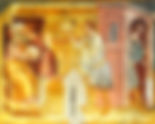
< Back Jacob the Patriarch David Cowles Dec 21, 2023 “Jacob was a bit of a rascal. He was a wimpy kid who cheated his brother and perhaps his employer to line his own pockets… (he) is ‘the patriarch for the rest of us.’” The relationship of Biblical stories to modern life is sometimes uncanny. Take the story of Jacob, for instance (Genesis 25–31). He is the third Patriarch of Israel, following Abraham and Isaac. His life story, like so many of our own, falls naturally into three distinct periods. First, Jacob’s youth. Genesis tracks Jacob’s curriculum vitae from conception; it even provides details of his mother’s pregnancy. Jacob turns out to be the second born of two twins, though he struggled with his brother (Esau) in Rebecca’s womb, each boy trying his best to secure the right of primogenitor. Like the not-always-so-cute twin boys down the street, Esau and Jacob competed for their parents’ affection. Esau, a ruddy athlete and an accomplished hunter, won Dad’s heart, while Jacob, the more introspective of the two, was the apple of Mom’s eye. What Jacob could not win with strength in the womb, he won with cunning in the world. Through a series of ruses, he wrested the right of primogenitor from Esau. When Jacob came of age, childhood over, Isaac blessed him and sent him out into the world to win wife and wealth. Retracing the route of his family’s historic migration to Canaan, Jacob traveled back across the Euphrates to the city of Harar, once home to his grandfather, Abraham. There, he worked for his uncle, Laban. Over time, Jacob earned the right to wed Laban’s two daughters; after 20 years, he left his uncle’s employ, taking with him his spouses and his children, a retinue, and flocks of goats, sheep, camels, donkeys, etc. ‘Rabbit is rich!’ Jacob has aced adulthood. But now he must return to his roots. He needs to reconcile with his brother and reconnect with his father. His narrative picks up right where it left off…after a 20-year hiatus. Sidebar : In Jacob’s era, life expectancy was just a bit more than half what it is today; Jacob’s story reflects that. He was probably no older than 15 when he received his father’s blessing and headed off toward Harar to make his fortune. Likewise, his period of production & procreation spanned just 20 years, compared to our usual 40. That still left the average male up to 15 years to enjoy the fruits of his labor and to reflect on the meaning of his adventures. There’s a lot of Jacob in all of us. Compared to heroic Abraham and holy Isaac, Jacob was a bit of a rascal. He was a wimpy kid who cheated his brother and perhaps his employer to line his own pockets. It’s a plot straight out of Succession …or Washington, D.C. Most of us would be more than happy to receive a ‘Gentlemen’s C’ from St. Peter. Even a C- would do nicely, thank you. A few of us might aspire to sainthood (B’s) but I doubt if any of us is seriously striving to be a patriarch. (That takes an A and only three confirmed A’s have ever been given out…though rumor has it that Job, Jesus, Peter and Paul may be on the list as well). Enough of Jacob; let’s get back to us. By hook or by crook, we just managed to get through childhood when suddenly we found ourselves confronted with the need to earn a living and, perhaps, support a family. Like Jacob’s labors, our work in the world is all-consuming; we have little time for whatever existential concerns remain unresolved. But kids grow up, and careers come to an end, happily or otherwise, at retirement. We no longer bear the full weight of the world on our shoulders. We are free to turn our attention back to ourselves. Who we are is once again more important than what we do. Now back to Jacob. He worked hard for Laban and produced great wealth, which benefited Laban and his family for 20 years, but he did it using Laban’s capital. When the time came for Jacob to depart with his ‘earnings’, Laban’s sons protested. Whose dollar is it? But Jacob didn’t wait around for a panel of ‘bent’ judges to rule against him; he did ‘what was right in his own eyes’ (Judges 21:25). He took what he thought he deserved and made off for Canaan. And so the first shot was fired in the war between capital and labor – a battle that is still raging today. Every time a union is formed, every time a strike is called, and every time a corporation pays a dividend to its shareholders or a bonus to its executives, you’re hearing the rumble of this war. Back in his home country, Jacob assumed the role of peacekeeper. He made a covenant with Laban, who had pursued him across the Euphrates. He reconciled with his brother Esau after conferring on him huge gifts of livestock. He slaughtered men who had raped his daughter, and he did his best to promote peace among his own warring sons. He followed the way of Voltaire: he tended his own garden. In this Jacob embodied the Eschaton, when ‘the wolf will lie down with the lamb’. “Forgive us our trespasses as we forgive those who trespass against us.” We are all called to make peace – not to eliminate differences, but to transform intensity-dampening conflicts into intensity-enhancing contrasts. The world needs Abrahams and Issacs and Jobs, for sure, but Jacob offers a different model of sainthood. Jacob is ‘the patriarch for the rest of us’. Like us, he swims in uncharted waters, trying to find a channel between survival, self-interest, duty and fairness. How’d he do? I doubt many of us would give him a ‘10’. But he did good enough to please God, and what else matters? Image: 14th century. Fresco. Pomposa Abbey, Codorigo, Italy. The story is from Genesis 27:1-40. The image does not follow it in a linear order. At left, Esau goes hunting with bow and arrow to get meat for a meal for his blind father, Isaac. At right, Jacob comes to his father and claims to be Esau with a dish he has prepared from the game he caught. Believing that this is Esau, Isaac gives him his blessing. In the middle, Esau has returned and is bringing his father another dish with game from his hunt. He will be distraught when he learns of Jacob's trick, which has left him without his father's blessing. Keep the conversation going! 1. Click here to comment on this TWS. 2. To subscribe (at no cost) to TWS and ATM, follow this link . 3. We encourage new articles and reprints from freelance writers ; click here to view out Writers’ Specs. Previous Share Next Do you like what you just read and want to read more Thoughts? Subscribe today for free! Thoughts While Shaving - the official blog of Aletheia Today Magazine. Click here.
- “ It was God who made Pharaoh obstinate." (Ex-9:12) What is our excuse? | Aletheia Today
< Back “ It was God who made Pharaoh obstinate." (Ex-9:12) What is our excuse? Deborah Kornfeld Apr 4, 2023 "...despite the few drops of wine, what do the plagues have to teach us?" I always look forward to the plagues. That part of the Haggadah recited in a singsong ritualistic manner is accompanied by the small thrill of putting my finger into the wine cup and marking my plate. It carries with it a memory that despite the power and might and Technicolor special effects accompanying our redemption, we need to be mindful that the Egyptians suffered. In the exquisite theatre of the Seder, every participant has an active role in this custom. To make out seders lively and fun for the children, we often decorate our table with frogs and beasts and lice- a real table-top menagerie. Yet despite the few drops of wine, what do the plagues have to teach us? Consider the first plague- “blood”. The Torah reads: “God said to Moses,” Tell Aaron to take his staff and extend his hand over the waters of Egypt- over their rivers, their canals, their reservoirs, and every place where water is kept- and the water shall turn into blood. There will be blood throughout all Egypt, even in wooden barrels and stone jars. Moses and Aaron did exactly as God had instructed, and Aaron held the staff up and then struck the Nile’s water in the presence of Pharaoh and his officials. The Nile’s water was transformed into blood. The fish in the Nile died, and the river became so polluted that the Egyptians were no longer able to drink the Nile’s water. There was blood everywhere in Egypt…. The Egyptians dug around the Nile for drinking water, since they could not drink any water from the river. After God struck the Nile, it remained that way for seven full days (Ex 7:19-231). They could have certainly applied for extra aid and qualified as a national disaster. It must have been horrific. People and wild life must have died. How could Pharaoh have been so stubborn and entrenched in his way of thinking? How could he have ignored this beginning of such a great wave of suffering? Now the answer regarding Pharaoh is found in Exodus 9:12-“It was God who made Pharaoh obstinate." There are many explanations and interpretations concerning the plagues. A midrash suggests that the Egyptians were punished measure for measure for the cruelty and indifference to the suffering of their Israelite slaves. Rav Kook explained that God brought the plagues upon the Egyptians in order that they should understand the essence of God’s presence in the world. His influence over everything. His intimate relationship with His world and His ability to do anything.” Another modern scholar explains the plagues as emblematic of our greatest fears. Shai Zarhi, an Israeli Educator, writes: “The plagues Gode visited on the Egyptians in Egypt seem to be a parade of people’s greatest fears. They are a mythological show of the power of the living vs. primal fear. Starting from the blood of birth and of death, through primal human fears of small creatures (lice) and large ones (wild beasts), fear of financial ruin (locusts), fear of the dark (losing direction and meaning), we face the greatest fear, the fear for our children’s lives-loss of the future. Tonight, a night to commemorate the past, we see the mercy of God’s protections, look out from our places at a world full of fears and dangers and pray for another quiet year.” The term used to describe Pharaoh’s indifference in the face of these disasters is “Kaved Lev “which is translated as meaning obstinate, stubbornly refusing to change his opinion or course of action despite the attempts to persuade him to do so. We are told in the Torah that God made Pharaoh obstinate so that this redemption would be spectacular with an abundance of special effects and everyone involved would know that it was God himself who orchestrated this redemption. In the time of the Egyptians, many of the plagues were reversible. The bloody Nile was returned to clear potable water, the boils disappeared, and the frogs went away. We are not so lucky with our man-made plagues. When we pollute the waterways or impact on our climate or waste precious resources simply because of greed and/or indifference, we cannot always reverse the consequences of our actions and the consequences might endanger our most precious commodity, that being our future. This year when I dip my finger into my wine cup as we recite the names of the Biblical plagues, I will remember that these plagues did have grave consequences on the Egyptians, but I will also see each stain on my plate as a promise of action to protect the next generations. Unlike Pharaoh, I can’t blame God, this time it is in our hands. This is a republication with permission from The Jewish Pluralist . The author of this essay, Deborah Kornfeld, is a retired pediatric occupational therapist, aspiring climate and social justice activist, occasional essayist, shul chesed coordinator, loving mother, and safta. Previous Share Next Do you like what you just read and want to read more Thoughts? Subscribe today for free! Thoughts While Shaving - the official blog of Aletheia Today Magazine. Click here.
- 500 Year-Long Nap | Aletheia Today
< Back 500 Year-Long Nap David Cowles Feb 24, 2022 It’s 1000 A.D. and Pope Sylvester II is the undisputed leader of the Christian Church in Europe. He is also generally regarded as the continent’s most accomplished scientist. Faith was strong at that time, but it did not interfere in any way with the exploration of nature. The relationship between Science and Religion was symbiotic…and synergistic. It was widely accepted that God revealed himself through the structures & processes of the universe as well as in Scripture & Tradition. It’s 1000 A.D. and Pope Sylvester II is the undisputed leader of the Christian Church in Europe. He is also generally regarded as the continent’s most accomplished scientist. Faith was strong at that time, but it did not interfere in any way with the exploration of nature. The relationship between Science and Religion was symbiotic…and synergistic. It was widely accepted that God revealed himself through the structures & processes of the universe as well as in Scripture & Tradition. So, no apparent contradiction could be real! If ever a contradiction does arise, rerun the experiments, review the data, reread the scriptures, and pray for inspiration! (Hmm, this might not be a bad practice for all of us, every day.) A major tenet of that faith was that no such contradiction could remain unresolved for long. Why? Because ‘faith was strong at that time’! Fast forward 500 years: now this same church is persecuting Galileo Galilei for his groundbreaking astronomical discoveries. What happened? Fear happened! The Inquisition was never a manifestation of faith; it was always a symptom of the lack of faith – bishops asking, “What if we’re wrong? Do we have a Plan B?” Unfortunately, that Plan B plunged the Atlantic community into a true dark age that lasted half a millennium. But now fast forward another 500 years! Two Jesuit astronomers from the Vatican Observatory played key roles in two recent discoveries: One found a new member of our solar system (2021 XD7) in orbit beyond Neptune; the other found evidence for a long-lost galaxy, Pontus, apparently “eaten” by our Milky Way. It’s not easy to wake up from a 500 year long nap, but we’re trying! Since the middle of the 20th century, there has been growing evidence of a tenuous rapprochement between the scientific community and its theological counterpart. It can’t happen soon enough! Previous Share Next Do you like what you just read and want to read more Thoughts? Subscribe today for free! Thoughts While Shaving - the official blog of Aletheia Today Magazine. Click here.
- CVS and Consciousness | Aletheia Today
< Back CVS and Consciousness David Cowles Oct 22, 2026 “…Congratulations…you just created your first universe. May I call you God? Or would you prefer Lord of ‘the Ring?” 1000 words, 5 minute read Riddle : What does a cash register receipt from CVS have in common with matter, consciousness, and revolution? Give up? Answer : They all exhibit 720° symmetry. “What? 720° symmetry? That’s ridiculous! You can have 90° symmetry, 180° symmetry, 360° symmetry, but never 720°. That’s just not a thing. The idea is ridiculous.” I agree with you. It is ridiculous…and yet, it is a thing! May I demonstrate? Next time you visit a CVS, don’t throw away the mile-long cash register receipt they give you at check-out. Instead, turn it into a loop—but not just any loop—a special kind of loop known as a Möbius strip: Hold the two ends of the receipt, one in each hand. Now twist one end 180 degrees. Then scotch tape the two ends together. Not too challenging, but congratulations anyhow: you just created your first universe. May I call you God ? Or would you prefer Lord of ‘the Ring’ ? But now what can you do with your Precious ? Run your finger along its surface. Keep going. Still going? It’s endless, isn’t it? You’ve taken an everyday rectangle, albeit elongated, with well-defined sides and edges and turned it into a one-sided loop with no boundary. You’ve created what topologists call a ‘non-orientable’ surface (or space). Now pick a spot on the ‘strip’ and imagine an arrow on that spot, pointing up; slide that arrow to the right or left until you come back to where you started (360°). Hmm, something’s different, isn’t it? Your arrow is pointing down now, as if it were a reflection of the original arrow. Of course, it is the original arrow, only now it’s ‘disoriented’, a bit like me after a long night at my local. But no problem! Just keep going in the same direction. Another 360° et voilà , your arrow’s pointing up again. Your universe is symmetrical after all, but that symmetry requires 720°, not the meager 360° you’re used to. At first, it seems amazing that we can create 720°symmetry in 360° space, but the phenomenon is not as rare as you might suppose. Ever heard of an electron? Electrons have something called spin – the subatomic analog of your finger running along the Möbius strip. We’re familiar with spheroids. Obviously, they exhibit 360° symmetry, right? Not necessarily. Turns out that the electron, the proton, and all massive subatomic particles exhibit 720° symmetry. They behave like a Möbius strip, not a baseball. Their spin takes them through 720° rather than the expected 360°. (BTW, just in case you were wondering, massless particles like the photon generally exhibit good old 360° symmetry while the graviton exhibits 180°.) 720° symmetry is important in another context: consciousness . I am aware of a table in front of me. Thanks to the properties of my central nervous system, I am aware of the look and feel of this table; but I am also aware of myself being aware of the table. This one event my takes me ‘around twice’, i.e. through 720°. That’s consciousness! But what is that ? Is it some sort of transcendental substance, a ‘soul’ perhaps? Or is it just another manifestation of a material ‘neural net’? Neither. It’s a topological feature of Universe per se , akin to the property of reflection: the Universe reflecting itself = the Universe being conscious. Consciousness is a manifestation of recursion…the subject acting on itself. Apparently, self-reflective recursion is an irreducible property of Being. Perhaps reflection/recursion is Being! Being as topos (topology) makes sense, doesn’t it? Events are knots in the fabric of time, eddies in the smooth, undifferentiated flow of pure potentia . Once upon a time, people broke Universe down into ‘mind’ and ‘matter’. Gilbert Ryle ( The Concept of Mind ) put an end to that. He demonstrated that that sort of dualism makes no sense. Mind and matter, like mind and body, are just different presentations of a single phenomenon. Today our models are more nuanced. But using the old terminology, it turns out that both mind (consciousness) and matter (massive particles) exhibit 720° symmetry. This appears to be the real, deep structure of Being, not the anemic ‘special case’ abstraction we know as 360° symmetry. As usual, we’ve mistaken the exception for the rule! We’ve fallen prey to Whitehead’s “fallacy of misplaced concreteness.” We have created an idol, a golden calf, a ‘toy universe’, Doxa , “changing place and exchanging bright color” at the expense of Aletheia , “what is…imperishable, whole…now, all together, one, continuous…” ( Parmenides ). “You say you want a revolution ” (The Beatles)? Well, you’re at home here! And what is a revolution other than the inversion of the socio-economic arrow? Marx called it a “Dictatorship of the Proletariat”. The Psalmists, Isaiah and Mark, did better: “The stone rejected by the builders has become the cornerstone.” The Theory of Revolution requires that the fabric of society (the political logos ) be non-orientable. How else can we turn the world upside down? Keep the conversation going! 1. Click here to comment on this TWS. 2. To subscribe (at no cost) to TWS and ATM, follow this link . 3. We encourage new articles and reprints from freelance writers ; click here to view out Writers’ Specs. 4. Aletheia Today Magazine (ATM) will be devoting its entire fall issue (released 9/1/23) to artificial intelligence (AI). What are the philosophical, theological, cultural and even spiritual implications of AI powered world? If you’d like to contribute to the AI Issue, click here . Previous Share Next Do you like what you just read and want to read more Thoughts? Subscribe today for free! Thoughts While Shaving - the official blog of Aletheia Today Magazine. Click here.
- Plato and Slime | Aletheia Today
< Back Plato and Slime David Cowles Feb 22, 2026 What’s so good about being slime? Well, how about the intelligence of Deep Blue, the wisdom of Solomon, (and) the virtue of Mother Theresa…” 1200 words, 6 minute read Ok, yes, we do have our issues with Plato and we haven’t been shy about sharing them on this site. But associating Plato with ‘slime’ is way over the top! Except it isn’t, because as we’ll soon see, ‘to be slimed’ is a very high honor indeed! Take a look at the Epilogue Plato attached to his best known Dialogue, The Republic . It tells the story of Er , a mythical character who returns to life. Plato presents a complex theory of reincarnation. It includes everything you’d expect from a box office blockbuster: cross species metempsychosis, karma, free will, chance, necessity, and fate. But Plato’s doctrine includes one feature that, if not unique, is at least less common. Souls get to choose how they will be reincarnated. One’s ‘reincarnation destination’ is not a reward or punishment or the fruit of one’s spiritual accomplishments. It is simply a choice, not an unrestricted choice, as we’ll see shortly, but a choice. “No daemon will cast lots for you; rather you shall choose your own daemon (fate).” This choice has its special conditions. Before you choose, God conducts a lottery to determine the selection order. God has prepared a variety of destinations (e.g. human, pig, tree, cell) for the reincarnating souls; and within each general ‘destination’, no two specific ‘situations’ will be the same. You have elected to be reincarnated as an owl…but in which tree in which forest and with what attributes? You can’t design your destiny, but you can choose it from a wide variety on offer…unless, of course, you’re the last to choose. “Let him to whom the first lot falls pick first the life to which he shall be chained. Virtue is not relevant here; each soul will share in virtue according to how it values it. All blame belongs to him who chooses; God is blameless.” Note : Everyone wants to be #1 but getting the #1 pick in God’s version of the NFL draft is not necessarily an advantage; the temptation to choose ‘beauty, wealth and power’ over ‘wisdom, virtue and humility’ often proves irresistible. A spot somewhere in the middle is probably best. But what if you’re at the end of the line? *** God could not have been nicer…or more apologetic. Yes, I was last in line and, yes, I was terrified. What fate could be so horrible that millions of souls passed over it on their way back to Earth? “There’s only one option left. I’m afraid you’re going to have to live out your next lifetime as Slime Mold.” I don’t know how much you know about slime but, spoiler alert , I could not have been more thrilled! If I couldn’t be the next Einstein, or Salk, or Joyce, or Matisse, I could be very happy being slime. I gave God a parting hug and a heartfelt ‘Thank you’. You should have seen the look on his face. (I guess he was used to souls screaming and writhing, hoping against hope that they might avoid the inevitable.) It’s not everybody who gets to surprise God! Even his famous omniscience failed him in this instance. So that was a double red letter day for me! I get to live out my next lifetime as slime and I got to put one over on the ‘Maker of Heaven and Earth’. God’s serving but I’m up ‘love 30’. *** Anyway, what’s so good about being slime? Well, how about the intelligence of Deep Blue, the wisdom of Solomon, the virtue (potentially) of Mother Theresa, and a lifetime pass to Ponce de Leon’s Fountain of Youth? Are you in? Slime Mold is a single celled organism. Unlike most unicellulars, it can have a diameter of as much as a foot and is often easily visible to the naked eye. As Slime Mold, my life – like your life now, dear reader - centers around the Gastronomic Imperative: Eat as much healthy food as possible, avoid environmental toxins (e.g. salt, sunlight), and minimize the expenditure of precious energy. Randomly, I explore my environment. When I encounter a food source, I build a conduit to that spot and I mark it in my ‘memory’ for future reference. Gradually, I map the food sources in my neighborhood and weight them according to their ‘resource density’. As I’m mapping, I’m also building my network. I need my network to deliver the most food in the shortest period of time with the least possible expenditure of energy. In just a few hours, I’m done, and my network is operating at 91% to 96% efficiency. My orienteering skills are second to none. I can build a map of neighborhood food sources as fast or faster than any supercomputer, balancing all the relevant variables. However, the computer generated network will be 100% efficient; the best I can do is 96%. Bummer? We’ll see about that… Example : If there are 25 food sources in my neighborhood, and I (slime) have to optimize my result across several variables (e.g. volume of food, distance from center, energy cost), I will need a few hours to complete the task. It will take a Supercomputer at least as long (it has to sort through 10^32 possible configurations). Of course, the computer’s result will be as much as 10% (100/91 = 110%) more efficient than mine. Can we turn vice into a virtue? My tolerance of deviations from optimum of up to 9% allows me to adapt much more quickly to future changes in the neighborhood (gentrification). When change does occur, no matter how slight or how temporary, the computer has to perform its multi-hour calculation all over again, from scratch, every time. The energy burden alone is unsustainable. I, on the other hand, can usually make any necessary adjustments in a matter of minutes. I never start from scratch…ever. I always build on what I’ve built. Change is almost never ‘catastrophic’ – why should adjustments be? A modern supercomputer may be smarter than me, but I am much, much wiser. Slime carefully conserves the past and builds on it; computers have no past to build on. Ok, intelligence, check; wisdom; check. What about the potential for virtue and the promise of perpetual youth? According to Karen Alim, a theoretical physicist at Harvard University: “Slime molds…are sensitive to aspects of each other’s behavior. They will approach others that have access to food, and avoid (burdening) ones that are starving or stressed…” Check. “They also prefer to approach young individuals… (when they) fuse with a younger individual, it’s as if they’re young again.” Check. Peer pressure can be a terrible thing. When your friends are all coming back as entrepreneurs and celebrities, artists and dictators, peregrine falcons and killer whales, you’re embarrassed to tell them you’ll be slime. That’s ok, be humble, don’t gloat, even though you and I know that you will be smarter, wiser, more virtuous, and more youthful than any of them. *** The Jungle (1942–43) by Wifredo Lam depicts elongated, mask-like human figures fused with sugarcane, leaves, and animal forms, creating a dense, claustrophobic tropical environment. The bodies appear neither fully human nor fully plant, suggesting spiritual transformation and the inseparability of identity from landscape. Philosophically, the painting reflects on colonial history, Afro-Caribbean spirituality, and the tension between exploitation and cultural resilience, presenting nature as both witness and participant in human experience. Previous Share Next Do you like what you just read and want to read more Thoughts? Subscribe today for free! Thoughts While Shaving - the official blog of Aletheia Today Magazine. Click here.
- Genesis and Revelation | Aletheia Today
< Back Genesis and Revelation David Cowles Aug 23, 2026 “Like all good bookends, they are symmetrical…Spacetime begins on the 7th day and ends with the 7th seal.” 1750 words, 8 minute read The canonical Christian Bible, finalized during the first centuries C.E., is beautifully constructed. Genesis and Revelation are its bookends and, like all good bookends, they are symmetrical. Like Peter Pan, Genesis takes us from void through the light and onto the created world while Revelation takes us from the created world through void onto Parousia . That said, do not expect the Apocalypse to look like a film of Creation run backwards. The processes are congruent but not mirror images. Check it out: Genesis : Now the earth was formless and empty, darkness was over the surface of the deep, and wind sweeping over waters, and God said, “Let there be light,” and there was light ! God saw that the light was good, and he separated the light from the darkness. God called the light “day,” and the darkness he called “night.” And there was evening, and there was morning—the first day . Revelation : I watched as the Lamb opened the first seal of seven. Then I heard one of the four living creatures say in a voice like thunder, “Come!” I looked, and there before me was a white horse! Its rider held a bow, and he was given a crown, and he rode out as a conqueror bent on conquest. Aletheia : Light ↔ white. Light is vectored (bow); it stands at the head of the created world (crown) and it is the prerequisite of all that follows (conquest). Genesis : And God said, “Let there be a vault between the waters to separate water from water.” So God made the vault and separated the water under the vault from the water above it. And it was so. God called the vault “sky.” And there was evening, and there was morning—the second day . Revelation : When the Lamb opened the second seal , I heard the second living creature say, “Come!” Then another horse came out, a fiery red one. Its rider was given power to take peace from the earth and to make people kill each other. To him was given a large sword . Aletheia : Separation ↔ sword. The sword is agent of division, as instrument of death; appropriately, it’s color is fire engine red. *** Genesis : And God said, “Let the water under the sky be gathered to one place, and let dry ground appear.” And it was so. God called the dry ground “land,” and the gathered waters he called “seas.” And God saw that it was good. Then God said, “Let the land produce vegetation: seed-bearing plants and trees on the land that bear fruit with seed in it, according to their various kinds.” And it was so. The land produced vegetation: plants bearing seed according to their kinds and trees bearing fruit with seed in it according to their kinds. And God saw that it was good. And there was evening, and there was morning—the third day . Revelation : When the Lamb opened the third seal , I heard the third living creature say, “Come!” I looked, and there before me was a black horse! Its rider was holding a pair of scales in his hand. Then I heard what sounded like a voice among the four living creatures, saying, “Two pounds[a] of wheat for a day’s wages, and six pounds of barley for a day’s wages, and do not damage the oil and the wine!” Aletheia : Gatherer economy ↔ distributive justice. Black ↔ (justice is) blind. *** Genesis : And God said, “Let there be lights in the vault of the sky to separate the day from the night, and let them serve as signs to mark sacred times, and days and years, and let them be lights in the vault of the sky to give light on the earth.” And it was so. God made two great lights—the greater light to govern the day and the lesser light to govern the night. He also made the stars. God set them in the vault of the sky to give light on the earth, to govern the day and the night , and to separate light from darkness. And God saw that it was good. And there was evening, and there was morning—the fourth day . Revelation : When the Lamb opened the fourth seal , I heard the voice of the fourth living creature say, “Come!” I looked, and there before me was a pale horse! Its rider was named Death , and Hades was following close behind him. They were given power over a fourth of the earth to kill by sword, famine and plague, and by the wild beasts of the earth. Aletheia : Time ↔ death (entropy, mortality). Death (Hades) entails the loss of defining qualia, e.g. the ‘shades’ in Homer’s underworld ( Odyssey ); ergo, “pale.” *** Genesis : And God said, “Let the water teem with living creatures, and let birds fly above the earth across the vault of the sky.” So God created the great creatures of the sea and every living thing with which the water teems and that moves about in it, according to their kinds, and every winged bird according to its kind. And God saw that it was good. God blessed them and said, “Be fruitful and increase in number and fill the water in the seas, and let the birds increase on the earth.” And there was evening, and there was morning—the fifth day . Revelation : When he opened the fifth seal , I saw under the altar the souls of those who had been slain because of the word of God and the testimony they had maintained. They called out in a loud voice, “How long, Sovereign Lord, holy and true, until you judge the inhabitants of the earth and avenge our blood?” Then each of them was given a white robe, and they were told to wait a little longer, until the full number of their fellow servants, their brothers and sisters, were killed just as they had been. Aletheia : Hunting ↔ martyrdom. The evolution of animalia opens up the possibility of expanding the gatherer economy to include hunting. The perverse analogue of hunting is martyrdom (we are the hunted). Question : Is there a vegetarian/vegan message embedded here? I will leave that to the reader. *** Genesis : And God said, “Let the land produce living creatures according to their kinds: the livestock, the creatures that move along the ground, and the wild animals, each according to its kind.” And it was so. God made the wild animals according to their kinds, the livestock according to their kinds, and all the creatures that move along the ground according to their kinds. And God saw that it was good. Then God said, “Let us make mankind in our image, in our likeness, so that they may rule over the fish in the sea and the birds in the sky, over the livestock and all the wild animals, and over all the creatures that move along the ground.” So God created mankind in his own image, in the image of God he created them; male and female he created them. God blessed them and said to them, “Be fruitful and increase in number; fill the earth and subdue it. Rule over the fish in the sea and the birds in the sky and over every living creature that moves on the ground.” Then God said, “I give you every seed-bearing plant on the face of the whole earth and every tree that has fruit with seed in it. They will be yours for food. And to all the beasts of the earth and all the birds in the sky and all the creatures that move along the ground—everything that has the breath of life in it—I give every green plant for food.” And it was so. God saw all that he had made, and it was very good. And there was evening, and there was morning—the sixth day . Revelation : I watched as he opened the sixth seal . There was a great earthquake. The sun turned black like sackcloth made of goat hair, the whole moon turned blood red, and the stars in the sky fell to earth, as figs drop from a fig tree when shaken by a strong wind. The heavens receded like a scroll being rolled up, and every mountain and island was removed from its place. Then the kings of the earth, the princes, the generals, the rich, the mighty, and everyone else, both slave and free, hid in caves and among the rocks of the mountains. They called to the mountains and the rocks, “Fall on us and hide us from the face of him who sits on the throne and from the wrath of the Lamb! For the great day of their wrath has come, and who can withstand it?” Aletheia : Mankind (sic) ↔ apocalypse. ‘Nuf sed! As Adam and Eve hid from God in Eden, so now we call upon Nature to conceal us from God’s scrutiny and to protect us from his wrath. *** Genesis : Thus the heavens and the earth were completed in all their vast array. By the seventh day God had finished the work he had been doing; so on the seventh day he rested from all his work. Then God blessed the seventh day and made it holy, because on it he rested from all the work of creating that he had done. Revelation : When he opened the seventh seal , there was silence in heaven for about half an hour. Aletheia : Rest ↔ silence. God’s creative process ( Genesis ) and his redemptive process ( Revelation ) are separated from the created world by a Markov Blanket : rest/silence. Ordinary spacetime begins with the dawn of ‘the seventh day’ and ends with the opening of ‘the seventh seal’. The world was created in the image of God, but the image is not the figure, the map is not the territory. There is an ontological ‘gap’ between God and World that protects the integrity of God’s process and the independence of his product. Question : Did John of Patmos, titular author of Revelation , intentionally recapitulate Genesis or did the subject matter itself dictate its presentation? Again, I defer to you, dear reader. Previous Share Next Do you like what you just read and want to read more Thoughts? Subscribe today for free! Thoughts While Shaving - the official blog of Aletheia Today Magazine. Click here.
- Alice | Aletheia Today
< Back Alice David Cowles In Looking-glass world, there’s plenty of there and then, but not a whiff of here and now. You remember Alice – the girl who chased a white rabbit down a hole and almost got her head chopped off by the Queen of Hearts! But did you know that later, when she was a bit older, Alice had another, entirely different adventure? Whenever Alice was bored, and she was often very bored – remember, in her day there was no TV, no smartphones and no video games – she would spend hours staring into the big mirror that hung on her living room wall. (I wonder if her parents limited her ‘screen’ time.) As she gazed into that looking glass, she could see a room on the other side. It looked just like her own living room…well, almost just like it. It looked just like it except that on the other side of the looking glass, everything was reversed! That’s right, reversed! If Alice stuck out her right hand to shake hands with the girl in the mirror, the girl in the mirror would stick out her left hand. If Alice wrote a note (from left to right, of course), the girl on the other side of the glass would write the very same note…but from right to left. Otherwise, everything looked exactly the same. But Alice wondered, “was it really the same?” After all, if right and left were reversed, maybe other things were reversed too. But how could she find out? “How nice it would be if we could only get into Looking-glass house,” she thought. And then, a moment later, there she was…on the other side of the glass! As expected, whatever Alice had been able to see in the mirror was just the same in Looking-glass house as it was in her own home. But what about everything she couldn’t see from her side? That turned out to be as different as different could be! Alice had been right to be suspicious of the mirror, after all. The mirror did not ‘reveal’ a world; it hid one. Alice immediately headed out of Looking-glass house and into its garden. She was not at all surprised to find flowers…but she was VERY surprised to learn that these flowers could talk! “…Can all the flowers talk?” Alice asked. “As well as you can,” said the Tiger-lily. “And a great deal louder.” Alice noticed a high hill in the distance. “I should see the garden far better,” said Alice to herself. “If I could get to the top of that hill: and here’s a path that leads straight to it…” Only it didn’t! No matter how hard Alice tried, no matter what turns she made, she always ended up right back where she started. But Alice was a very clever girl, so she decided to try a new plan. Instead of walking toward the hill and always missing it, she decided to walk in the opposite direction, away from the hill, to see where that would take her. Her plan succeeded beautifully. She hadn’t been walking more than a minute when she found herself at the base of the hill. So, it’s not just right and left that are reversed in Looking-glass world; it’s also to and from, forwards and backwards. At the base of the hill, Alice met the Red Queen. After some polite conversation, Alice and the queen suddenly started running. They ran hand-in-hand, as fast as they possibly could, for as long as they possibly could. But while she was running, Alice noticed something strange: the trees and the other things around them never changed; they seemed to move right along with them. Finally, the queen stopped, and Alice flopped to the ground breathless beside her. Then she noticed, “…We’ve been under this tree the whole time! Everything’s just as it was!” Alice complained to the queen, “…In our country, you’d generally get to somewhere else – if you ran very fast for a long time as we’ve been doing.” But the queen replied, “Now here, you see, it takes all the running you can do just to stay in the same place. If you want to get somewhere else, you must run at least twice as fast as that!” Next, Alice encountered the White Queen and her majesty looked quite the mess. Alice did her best to help the queen tidy up, and then she suggested that the queen might like to hire a maid to help her stay neat and clean in the future. The queen offered the job to Alice, “Two pence a week and jam every other day.” Imagine getting by on an allowance of two pennies a week! I guess pennies could buy a lot more in Alice’s time. But Alice didn’t object to the low wage; instead, she protested that she didn’t like jam, “Well, I don’t want any to-day at any rate.” “You couldn’t have it if you did want it,” the queen said. “The rule is jam tomorrow and jam yesterday – but never jam today …” Alice objected, “It must come sometimes to jam today.” “No, it can’t,” said the queen. “It’s jam every other day; today isn’t any other day, you know.” “I don’t understand you,” said Alice, obviously puzzled. “That’s the effect of living backwards,” the queen explained. “It always makes one a little giddy at first.” Then the queen decided to tell Alice more about what it’s like to live on her side of the glass. “Memory works both ways,” she said. “I’m sure mine only works one way,” interrupted Alice. “I can’t remember things before they happen…What sorts of things do you remember best?” “Oh, things that happened the week after next,” the queen replied. The queen pointed to the King’s Messenger, “He’s in prison now, being punished, and the trial doesn’t even begin till next Wednesday, and of course, the crime comes last of all.” Before Alice could object to this unfair treatment, the queen began screaming. Alice rushed to comfort her, “What is the matter? Have you pricked your finger?” “I haven’t pricked it yet,” the queen said. “But I soon shall.” And sure enough, a moment later, she did just that! But let’s get back to the matter of the jam. Alice explained to the queen that she did not like jam, “Well, I don’t want any to-day at any rate.” Remember what the queen said? “’You couldn’t have it if you did want it…the rule is, jam tomorrow and jam yesterday – but never jam today .” So, in Looking-glass world there is a past (yesterday) and a future (tomorrow), but never a present (jam today). Later, Alice found herself in a shop where every shelf seemed to be overflowing with interesting things to buy. But whenever she walked up to any particular shelf, that shelf was always completely empty. The shelves that are there are always full, but the shelf that is here is always empty! In Looking-glass world, it seems you can have all the jam you want…just not now ; and you can buy anything you want…just not here . The stores are always brimming with merchandise, but always out of whatever it is you want. In Looking-glass world, there’s plenty of there and then, but not a whiff of here and now . Later, while visiting Tweedledum and Tweedledee, Alice sees the Red King. He is asleep. “He’s dreaming now,” said Tweedledee. “And what do you think he’s dreaming about?” “Nobody can guess that!” Alice replied. Alice is depending on the difference between inside and outside to keep her thoughts, and the king’s, private. But Tweedledee knows better. The way Looking-glass world works, inner and outer could be reversed; or the distinction could be wiped away entirely. Either way, Tweedledee knows that in Looking-glass world, anyone can see what you’re thinking just by looking at you. “Why about you !” Tweedledee continued, returning to the content of the Red King’s dream. “And if he left off dreaming about you, where do you suppose you’d be?” “Where I am now, of course,” said Alice. “’You’d be nowhere,” replied Tweedledee. “Why you’re only a sort of thing in his dream!’” (It seems that Shakespeare listened to Tweedledee’s podcasts because in one of his most famous plays, The Tempest , he wrote, “We are such stuff as dreams are made on.”) “If the King were to wake,” added Tweedledum. “You’d go out – bang! – just like a candle!’” Toward the end of her stay in Looking-glass world, Alice met the famous Humpty-Dumpty. Like any good girl of her day, Alice knew her nursery rhymes backwards and forwards, so when she met Humpty, she was immediately worried about his safety. “Don’t you think you’d be safer down on the ground? That wall is so very narrow!” In response, Humpty Dumpty growled. “Of course, I don’t think so. Why, if I ever did fall off – which there’s no chance of – but if I did…the King has promised me – with his very own mouth…” Here Alice interrupted, “To send all his horses and all his men…” Moments later, a crash shook the forest from end to end and soldiers came running, first two or three, then ten or twenty, finally thousands. So many that they seemed to fill the whole forest! The king had kept his promise. But would his horses and his men be able to put Humpty together again? Maybe not on our side of the looking glass, but on the other side…who knows? At the end of her adventure, when Alice was once again safely back on her own side of the mirror, she thought about her experience and said to her pussycat, “’Now, Kitty, let’s consider, who it was that dreamed it all…it must have been either me or the Red King. He was part of my dream, of course – but then I was part of his dream too!’” David Cowles is the founder and editor-in-chief of Aletheia Today Magazine. He lives with his family in Massachusetts where he studies and writes about philosophy, science, theology, and scripture. He can be reached at david@aletheiatoday.com. Share Previous Next
- Give us your honest opinion, please. | Aletheia Today
< Back Give us your honest opinion, please. David Cowles Sep 15, 2022 Give us your honest opinion, please. Thank you for subscribing to Aletheia Today and Thoughts While Shaving. We’re thrilled to share our insights and opinions with you. In order to continue to serve you best, we kindly ask that you take a minute to provide us with your feedback. By answering these brief questions, you'll help us improve and better serve you. Thanks again, David Cowles, Editor-in Chief Enter the survey here. Previous Share Next Do you like what you just read and want to read more Thoughts? Subscribe today for free! Thoughts While Shaving - the official blog of Aletheia Today Magazine. Click here.
- Loaves & Fishes II | Aletheia Today
< Back Loaves & Fishes II David Cowles Jul 3, 2025 “So was the feeding of the 5,000 a miracle? Yes…and no!” In an earlier post on this site, we ‘decoded’ the New Testament ‘miracle’ known as the Multiplication of Loaves & Fishes . We discovered that the New Testament (NT) accounts of two separate ‘multiplication events’ form a pattern which allows us to understand their deeper meaning. So what’s the ‘answer’ to the riddle posed by the ‘multiplication’? Why, it’s the number 3 of course! What else could it be? (Discover that for yourself; just click on the link above.) But these accounts raise a deeper question: “How’d he do it?” Of course, a simple answer is, “By the power of God who is omnipotent.” Now, if this answer fully satisfies you, you may not need to read on. But if you’re looking for a more heuristic explanation, please continue. What is a miracle? Is it a suspension of the laws of physics? The intervention of a transcendent and omnipotent power? That’s the standard ‘explanation’…such as it is. Or is it just a perfectly natural, but unusual, event? Folks who explain the Exodus as a rare confluence of unlikely meteorological conditions fall into this camp. Or do ‘miracles’ provide us with a glimpse of an entirely physical reality that exists below the surface of conventional spacetime? (Like quantum mechanics, e.g.) In other words, can we retain the concept of the miraculous but reconcile it with materialism? Folks like me who fall into this later camp do not intend to denigrate in any way the power of God. Rather, we defend it! We simply seek to preserve the ontological independence of the world as God created it. What if the scrubbed and manicured world we call ‘home’ is just a surface, a region, an approximation or an idealization of a much more variegated universe in which many alternative states of affairs may apply? What if there is something about our cognitive apparatus that prompts us to see the phenomenal world as we do, even though it’s an over-simplified version of what’s real? Or what if the substructure of the universe itself is ‘Cloud Cuckoo Land’? ( The Lego Movie ) Sidebar : Wikipedia says that someone who lives in Cloud Cuckoo Land, “thinks that completely impossible things might happen…” Yup, that’s us…modified to read: “thinks that infinitesimally probable things actually happen.” Etymologically, this concept derives from the medieval Cockaigne , a ‘land of plenty’. Philosophically, the term first appears in Aristophanes’ play, The Birds (414 BCE), but it has appeared more recently in the philosophies of Schopenhauer and Nietzsche . The ‘multiplication of loaves and fishes’ is a miracle because you are not supposed to be able to satisfy the appetites of 5,000 hungry pilgrims with just 5 loaves of bread and 2 fish. If a loaf of bread weighs a kilogram, then each pilgrim would receive one gram of bread. (A gram is roughly 1/25 th of an ounce.) If this works, it’s even better than Atkins . But of course it doesn’t work, at least not in the world we’re accustomed to. It doesn’t work because the volume of the ‘parts’ (5,000 crumbs = 5 kilograms) cannot exceed the volume of the ‘whole’ (5 loaves = 5 kilograms) and 1/25 th of an ounce will not satisfy a hungry boy (or girl). This is obviously true in the world as we know it (and in any world characterized by the Archimedean Property ). But who died and made Archimedes boss of the universe? According to Nietzsche, God did! RIP Suppose our everyday Archimedean world is just a special case of a much more flexible, non-Archimedean universe, where the quantitative relationship between a whole and its parts is no longer hardwired by the laws of arithmetic. (What’s the big deal? Zeno disproved those laws 2500 years ago!) Breaking the bread (loaves) into individual portions, we create 5,000 disjoint morsels. In a non-Archimedean universe, the volume of the parts (morsels) can exceed the volume of the whole! In fact, even a single morsel can exceed the volume of the whole. The morsels, considered together or apart, can contain more bread, potentially much more bread, than the 5 loaves from which they were crumbled. That was the case on a certain day on the northern shore of the Sea of Galilee 2,000 years ago. Not only did 5 loaves fill the bellies of 5,000 day trippers but the apostles were able to gather up 12 baskets of scraps at the end. 5,000 were fed and there was more left over than there was at the beginning. If only my household budget worked like that! (Perhaps it would if I followed NT economic principles.) So was ‘the feeding of the 5,000’ a ‘miracle’? Yes…and no! It was certainly a manifestation of God’s power in the person of Jesus ( you don’t routinely dip into the non-Archimedean substructure to solve your problems); but it did not violate any of the laws of (non-Archimedean) physics nor did it compromise the independence of the created world (Genesis 1). *** "The Miracle of the Loaves and Fishes" (1624–25), oil on canvas by Giovanni Lanfranco, Italian, 1582–1647. 229 x 426 cm. Purchased in 1856. https://www.aletheiatoday.com/thoughtswhileshaving/loaves-and-fishes Previous Share Next Do you like what you just read and want to read more Thoughts? Subscribe today for free! Thoughts While Shaving - the official blog of Aletheia Today Magazine. Click here.